
Aventon Current eMTB Review: A Surprising Entry into Full-Suspension Electric Mountain Biking
Introduction
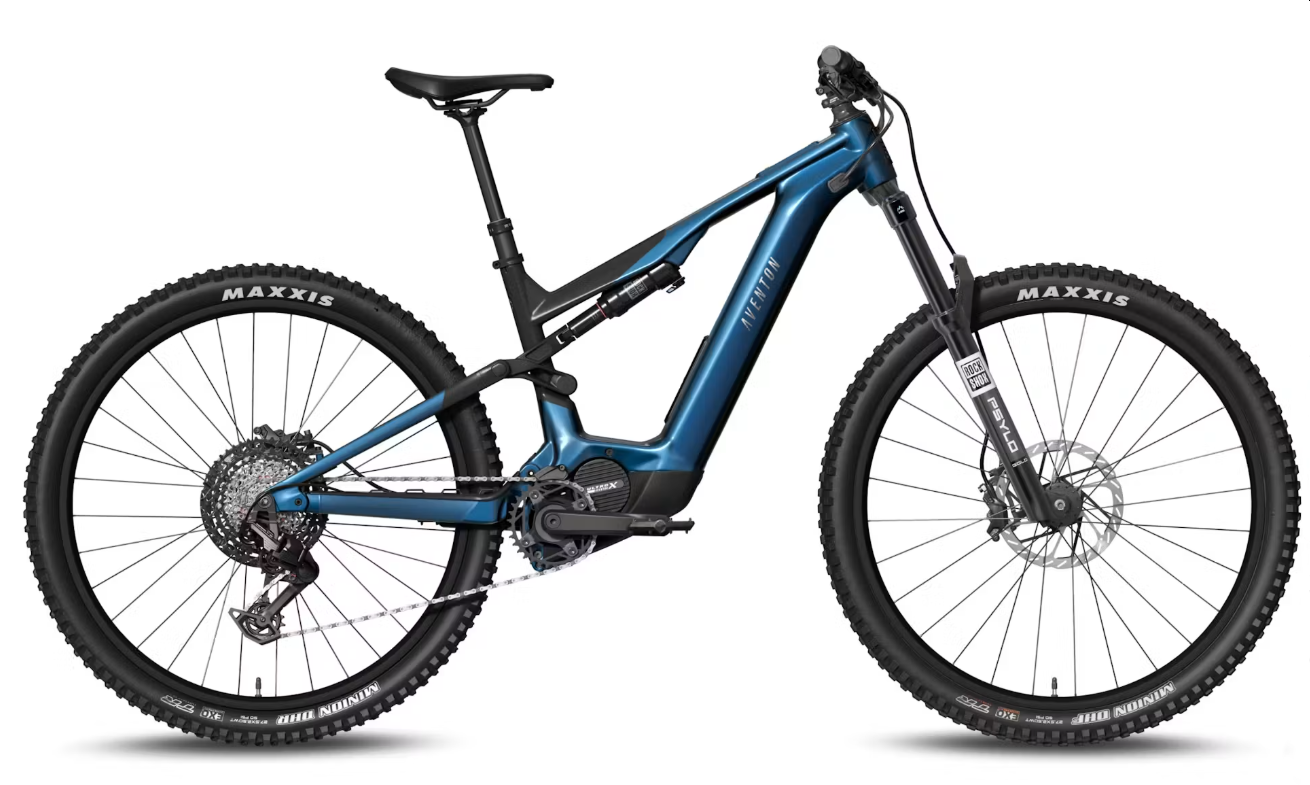
Aventon has built its reputation on delivering accessible, value-oriented electric commuter bikes that prioritize affordability without sacrificing innovation. The brand’s expansion into the full-suspension electric mountain bike market represents a significant departure from its core competency, raising legitimate questions about whether a company known for urban mobility can successfully navigate the demanding world of trail-focused e-bikes. The Aventon Current answers those questions with a compelling proposition: a powerful, feature-rich eMTB that challenges the notion that serious mountain biking requires premium pricing.
The Current marks Aventon’s first full-suspension offering, and the company has approached this market entry with considerable thoughtfulness. Rather than simply adapting existing commuter bike technology, Aventon developed a purpose-built platform featuring an all-new Ultra X motor system, sophisticated onboard electronics, and carefully selected components designed to handle genuine trail work. This review examines whether the Current delivers on its promise of combining raw power and innovative technology with practical trail performance.
Frame Design and Geometry
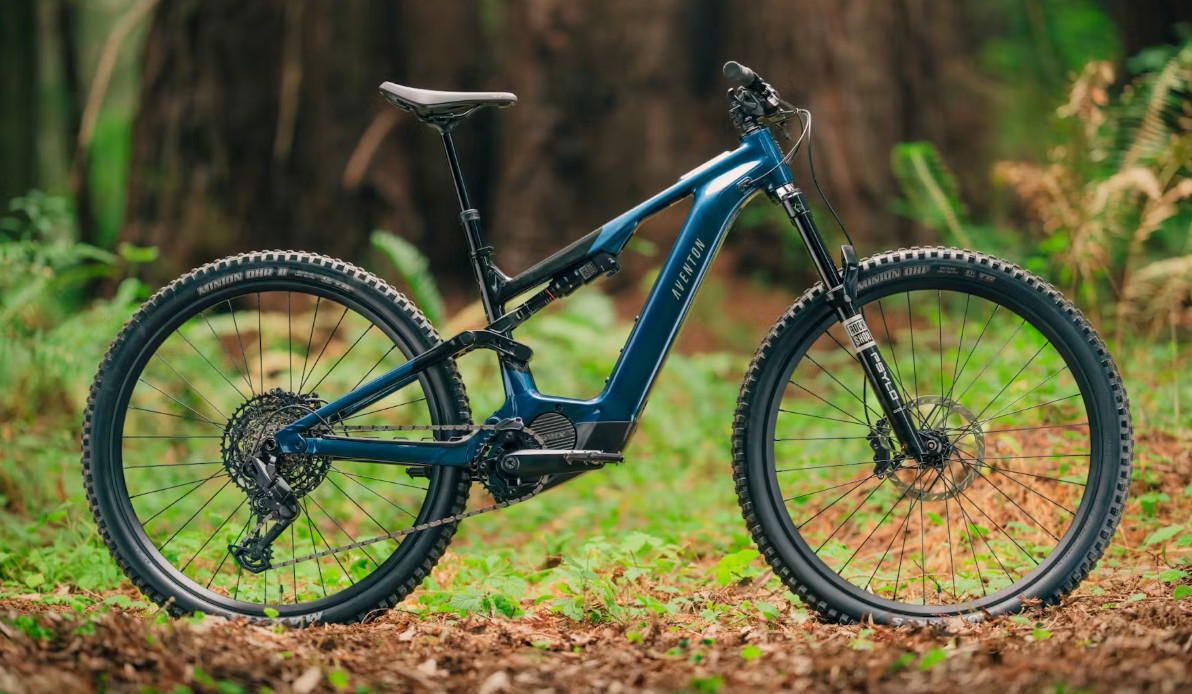
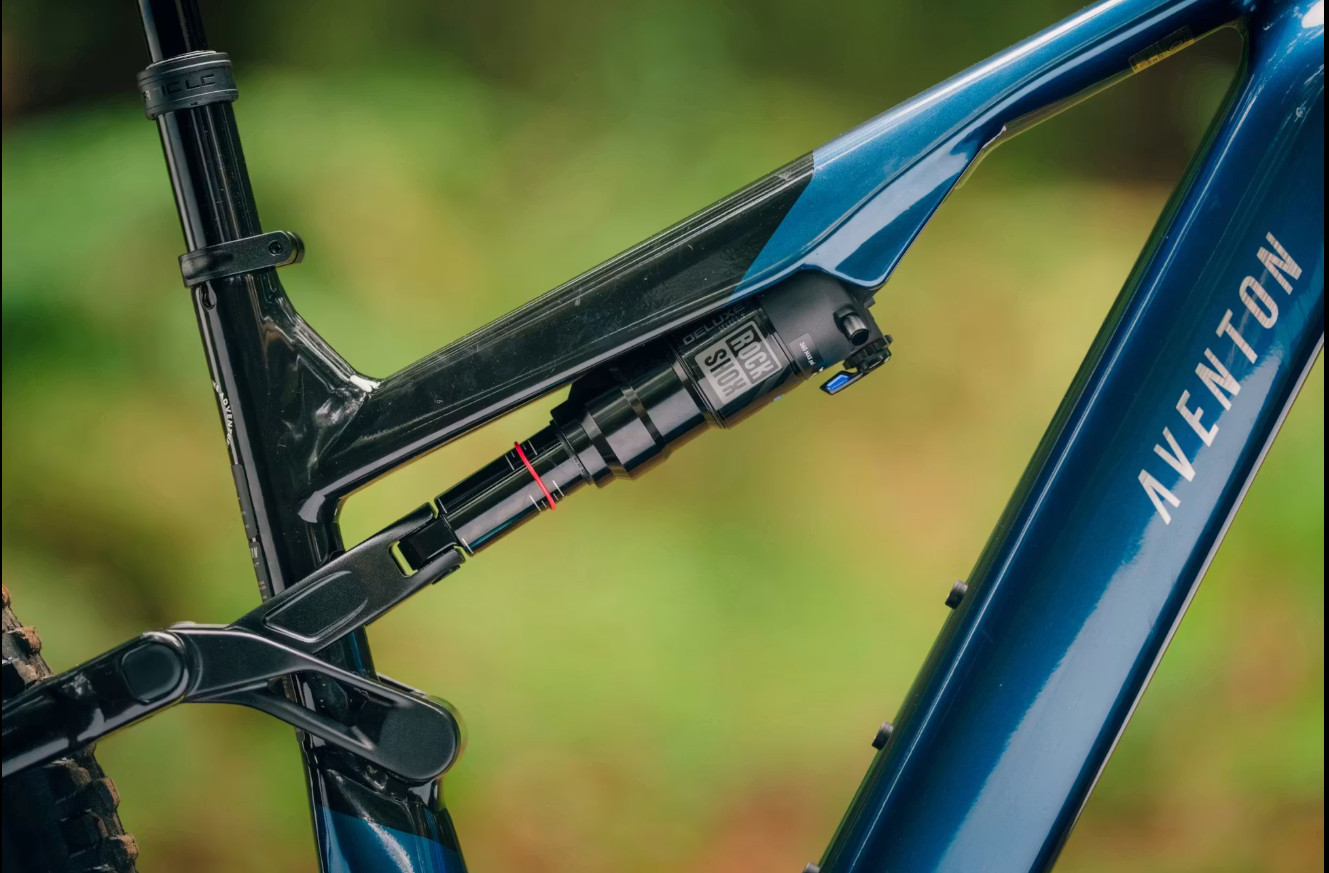
The Current is available in both carbon and aluminum front triangle configurations, with the mid-tier ADV model tested here featuring an aluminum front triangle and a price point of $4,599. The frame design reflects thoughtful engineering choices that balance the demands of housing a powerful motor with maintaining practical usability. The shock positioning sits notably high within the frame, a design decision that enables riders to mount a full-size water bottle on all frame sizes through Aventon’s proprietary bottle cage adapter—a small but meaningful detail for longer rides.
The frame incorporates several features that appeal to modern trail riders. Universal Derailleur Hanger (UDH) compatibility ensures future drivetrain flexibility, while generous downtube and chainstay protection guards against the inevitable impacts of trail riding. Full internal cable routing contributes to a clean aesthetic and protects components from the elements. Despite these features, the Current tips the scales at 56.8 pounds (25.8 kg), placing it on the heavier end of the mid-travel eMTB spectrum.
Geometrically, the Current occupies familiar territory for mid-travel electric mountain bikes. The 64.6-degree head tube angle and 76.6-degree seat tube angle align with contemporary trail bike standards, though the 442mm seat tube length on size large runs slightly longer than many modern alternatives. The 445mm chainstays across all sizes represent a deliberate choice to accommodate the substantial motor package, and this extended rear end has meaningful implications for handling characteristics that become apparent during trail riding.
Powertrain and Battery System
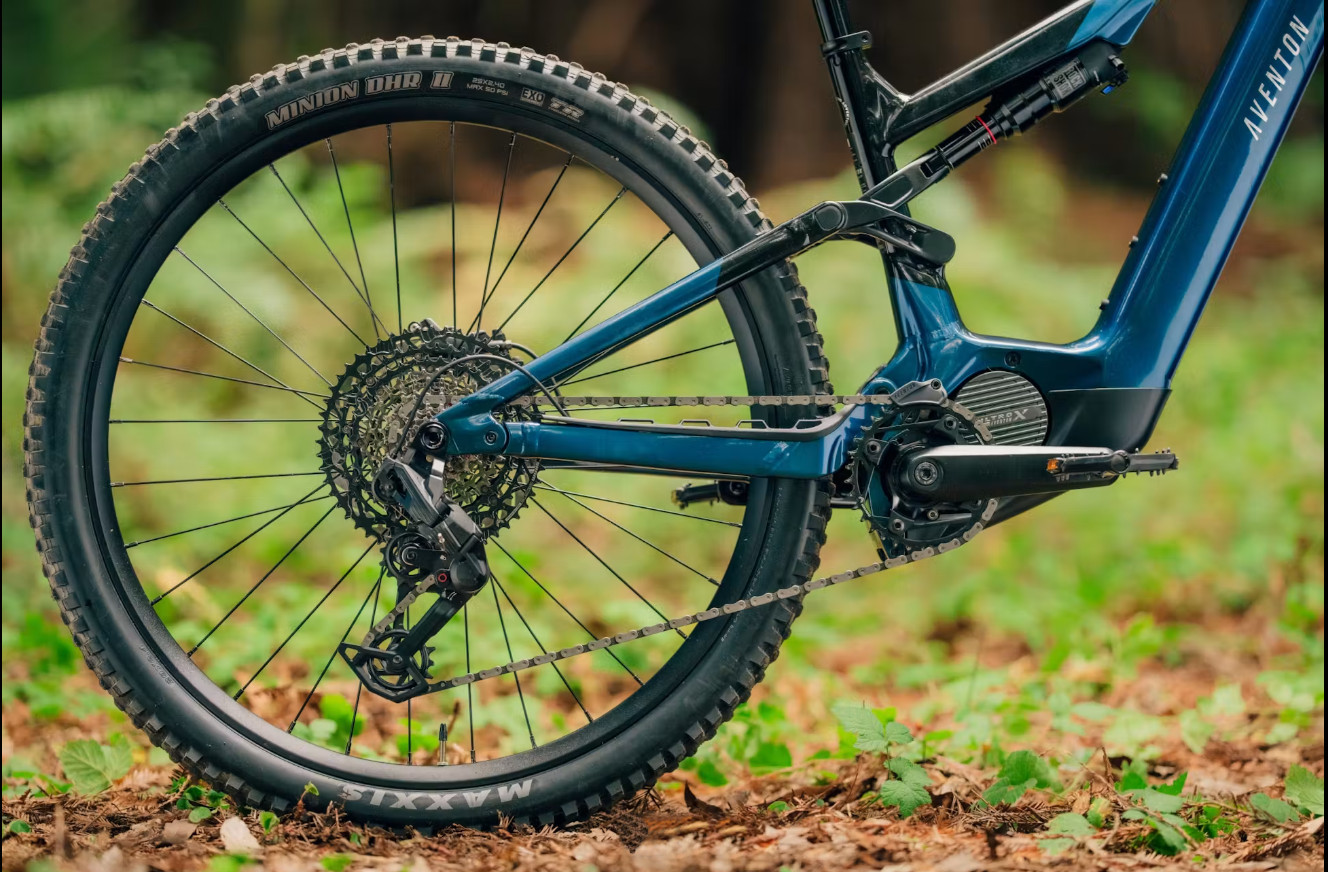
The standout feature of the Current ADV and EXP models is the all-new Ultra X motor, one of the most powerful Class 1 motors available on the market. Delivering up to 850 watts of peak power and 120 newton-meters of torque in its highest boost mode, the Ultra X represents a significant step forward in motor capability. This power output becomes immediately apparent during acceleration and climbing, where the motor’s responsiveness and force delivery create an almost overwhelming sense of propulsion.
The motor operates across five distinct power modes: eco, trail, turbo, boost, and auto. The three primary modes—eco, trail, and turbo—can be fully customized through the Aventon app, allowing riders to tailor power delivery to their preferences and riding style. Trail mode emerged as the optimal setting for most singletrack riding, providing a balanced blend of assistance and manageable handling characteristics. The higher boost and turbo modes, while exhilarating on fire road climbs and flowing terrain, demand considerable skill to manage on technical trails where precision matters more than raw power.
The 800-watt-hour battery sits in the downtube and is fully removable, facilitating charging flexibility and maintenance access. Aventon claims a range of up to 105 miles, though real-world testing suggests this figure represents an optimistic scenario. During extended rides using trail and turbo modes, the Current easily delivered 30+ miles of riding with substantial battery remaining, indicating that range anxiety is unlikely to plague most users. The battery’s capacity and the motor’s efficiency combine to create a practical all-day riding experience for most trail scenarios.
Control of the drive system occurs through a wireless bar-mounted remote and an integrated full-color touchscreen display mounted on the top tube. The wireless remote’s mode control buttons prove intuitive and responsive, while the display itself demonstrates impressive durability and clarity even when used with wet gloves. Beyond basic ride data like speed and range, the display provides power output information and even includes a compass. The real innovation, however, lies in the Aventon Control Unit (ACU), the system’s central processing brain that manages everything from power ramping and delivery governance to more sophisticated features including GPS tracking, password-protected integrated bike lock functionality, and over-the-air firmware updates. A particularly novel feature is the jump tracker, which records jump distance and impact force—a fun addition that appeals to riders interested in quantifying their trail performance.
The Ultra X represents genuinely new technology, and while the system performed flawlessly during testing, the newness of this platform warrants acknowledgment. Aventon’s two-year warranty on all electronic components provides some reassurance, though the long-term reliability story remains to be written as more units accumulate trail miles.
Suspension, Components, and Handling
The Current ADV pairs a RockShox Sektor Gold 150mm fork with a Deluxe Select Plus rear shock, creating a suspension package that performs admirably despite some limitations. The Sektor Gold represents RockShox’s more budget-conscious 35mm stanchion offering, yet it manages smaller bumps and trail chatter effectively while providing impressive support through the first half of its travel. Larger, more aggressive riders may detect some flex in the 35mm stanchions under the bike’s considerable weight, but for typical trail riding, the fork delivers competent performance.
The rear suspension, however, presents the bike’s most notable weakness. The Deluxe Select Plus exhibits a relatively linear suspension curve with minimal initial sensitivity, while simultaneously bottoming out its 140mm travel too readily. Even at 25% sag, the shock fails to deliver the progressive, controlled feel that modern trail riders expect. This limitation becomes particularly apparent on steeper, more technical descents where the suspension’s behavior undermines confidence. A volume spacer adjustment could address this issue affordably, suggesting that the rear end’s performance is tunable rather than fundamentally flawed.
The drivetrain utilizes SRAM’s Eagle 70 system, which proves to be an excellent match for the Current’s substantial power output. The Eagle 70’s smooth shifting under load—among the best of any mechanical groupset—handles the motor’s forceful assistance without hesitation. The DB8 brakes, spec’d with 200mm rotors front and rear, provide adequate stopping power for the bike’s weight and speed capabilities, though they don’t inspire the confidence of premium hydraulic systems. The braking performance never becomes a limiting factor during typical trail riding, though riders pushing harder may eventually desire more powerful stoppers.
The Current rolls on a generic tubeless-ready 29-inch wheelset wrapped in Maxxis Minion DHF (2.5-inch) and DHR II (2.4-inch) tires with EXO casing. While these tires provide capable traction, the bike’s weight and geometry could quickly overwhelm the stock rubber. Upgrading to heavier-duty casings represents the most logical out-of-box modification for riders planning regular trail use.
Assembly, Setup, and Real-World Performance
The Current arrives substantially pre-assembled, requiring only bar attachment, saddle installation, and front wheel mounting. However, the assembly process revealed a couple of minor frustrations. The Eagle 70 drivetrain arrived slightly out of tune, requiring barrel adjustment before smooth shifting. More problematically, the wireless drive mode controller arrives unpaired from the bike, a critical detail buried on the final pages of the user manual after extensive discussion of features accessible through that very controller. These issues, while resolvable, create unnecessary friction for customers expecting a ready-to-ride experience.
Once assembled and properly configured, the Current’s power delivery immediately impresses. The motor’s responsiveness and force output create an almost intoxicating sensation, particularly in boost mode on open terrain. The bike’s intended sledgehammer-rather-than-scalpel character becomes apparent during trail riding. On flowing fire road climbs, the Current’s power proves invaluable, enabling riders to maintain 10+ mph while towing additional weight or passengers. In trail mode on singletrack, the motor provides sufficient assistance to transform mundane climbing sections into engaging uphill flow trails.
The bike’s limitations emerge on technical terrain where precision matters more than power. The combination of long chainstays and substantial weight makes it difficult to position the bike exactly where desired, encouraging riders to rely on motor power to bulldoze through imperfect line choices rather than cleanly navigating tricky sections. Similarly, on descents, the bike’s weight and geometry make popping off smaller features futile; instead, riders simply apply power and let the motor do the work. This approach proves entertaining but lacks the elegance of lighter, more nimble platforms.
One persistent issue throughout testing was frame noise, likely from cable rattle resonating through the aluminum frame. Despite multiple trailside inspections confirming everything remained secure, the rattling continued—a minor annoyance that doesn’t affect functionality but does detract from the overall refinement feel.
Market Positioning and Competitive Context
The Current ADV occupies an interesting position within the eMTB market. Compared to the $3,999 Polygon Siskiu T70, the Current offers significantly more power (850W versus 600W) and a larger battery (800Wh versus 630Wh), though it weighs slightly more and costs $600 additional. The Polygon’s Shimano EP801 motor represents proven, reliable technology, and its component selection actually rivals the Current’s despite the lower price. On the trail, both bikes feel relatively similar, though the Polygon’s slightly lighter weight and suspension tuning create a marginally more planted feel on bigger features.
The $4,799 Orbea Rise SLX 30 presents a different value proposition, prioritizing weight savings (46 pounds versus 56.8 pounds) through a smaller 540Wh battery and the same Shimano motor as the Polygon. The Orbea’s significantly lighter weight and sportier geometry likely deliver more agile handling and a riding experience closer to analog mountain bikes, though this comes at the cost of reduced range and power.
The Current’s unique niche lies in delivering maximum power and range at a price point below $5,000. Few manufacturers offer trail-ready eMTBs with motors approaching 850 watts at this price, and none combine that power with Aventon’s innovative ACU technology and thoughtful component selection. For riders prioritizing climbing capability and all-day range over lightweight agility, the Current presents compelling value.
Conclusion
Aventon’s entry into the full-suspension eMTB market demonstrates that the company has done its homework. The Current successfully delivers a capable, feature-rich electric mountain bike that challenges the assumption that serious trail performance requires premium pricing. The Ultra X motor’s power output, the innovative ACU technology, and the overall component selection create a package that punches above its price point.
The bike’s limitations—rear suspension refinement, overall weight, and handling characteristics that favor power over precision—reflect design choices rather than engineering failures. These characteristics align with the Current’s intended purpose as a powerful, accessible eMTB for riders who value climbing capability and range over lightweight agility.
For prospective buyers seeking maximum power and range at an accessible price, the Aventon Current represents a genuinely compelling option. The bike proves that Aventon can successfully translate its commuter bike expertise into the demanding mountain bike space, and if this first offering is any indication, the brand’s future eMTB lineup promises to be equally thoughtful and innovative.